De complete beginnersgids voor stippen schilderen
Als je nog nooit gestippeld hebt, dan behandelt deze gids alles wat je moet weten voordat je begint. Wat er precies in je pakket zit, hoe je eerste sessie zal aanvoelen, de ene techniektip die het grootste verschil maakt, en hoe je het juiste ontwerp kiest voor je eerste poging.
Wat stippen schilderen precies is
Stippen schilderen is eenvoudiger dan het klinkt. Je canvas wordt geleverd met duizenden kleine cirkels, elk gemarkeerd met een kleurcode. Jouw taak is om elke cirkel te vullen met de bijbehorende stift. Stip voor stip, cirkel voor cirkel, bouwt de afbeelding zich op.
Je hoeft niet te tekenen, schetsen, of creatieve beslissingen te nemen over kleur of compositie. Het canvas doet dat allemaal. Jij zorgt voor de tijd, de focus en het geduld.
Het effect is echt verrassend. Van dichtbij ziet een voltooid gedeelte eruit als rijen gekleurde stippen. Vanaf een meter afstand ziet het eruit als een gedetailleerd schilderij. Dit is hetzelfde optische principe dat door negentiende-eeuwse pointillistische kunstenaars werd gebruikt: het menselijk oog versmelt stippen tot een continue kleur en vorm wanneer ze op normale afstand worden bekeken.
Wat zit er in je pakket
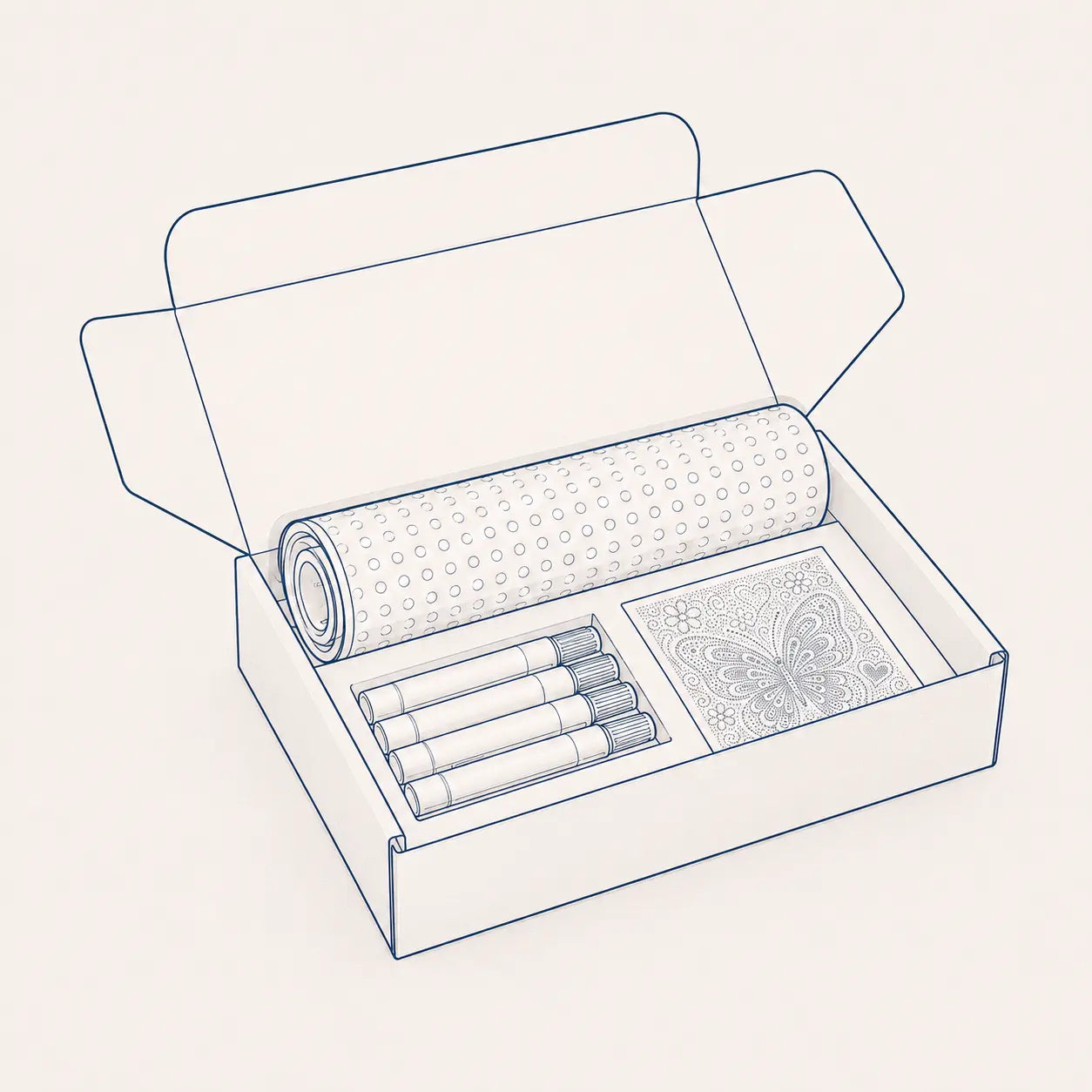
• Voorgedrukt canvas — De cirkels en kleurcodes worden direct op het canvas gedrukt in een lichte inkt. Terwijl je elke cirkel vult, verdwijnen de leidende markeringen onder de kleur van de stip.
• Dual-tip markers — Eén dikke punt (1,0 mm) voor grote cirkels, één fijne punt (0,5 mm) voor kleine detailcirkels. Elk pakket bevat precies de kleuren die nodig zijn voor jouw specifieke ontwerp. Je hoeft geen extra's te kopen.
• Snelstartgids — Een korte gedrukte instructiehandleiding met de basisprincipes.
Er is niets anders nodig. Geen extra kunstbenodigdheden, geen voorbereidend werk, geen ervaring.
Je klaarmaken voor je eerste sessie
De meest voorkomende beginnersfout is werken bij slecht licht. Als je de kleurcodes die op het canvas zijn gedrukt niet duidelijk kunt zien, wordt de sessie onnodig frustrerend. Gebruik daglicht of plaats een heldere bureaulamp zo dat deze over het canvas valt zonder schaduwen te creëren. Dit alleen al maakt een aanzienlijk verschil in hoe gemakkelijk het proces aanvoelt.
Naast goede verlichting: een platte tafel, een comfortabele stoel en dertig ononderbroken minuten. Dat is echt alles wat je nodig hebt.
Je eerste tien minuten
Kies een hoek van het canvas en begin daar. Werk van de ene rand naar de andere, in diagonale lijnen, zodat je hand altijd over voltooide stippen beweegt in plaats van op verse inkt te rusten.
De eerste paar minuten zul je je concentreren op het proces zelf: kleurcodes controleren, de juiste punt kiezen, een ritme opbouwen. Dit is normaal en gaat snel voorbij. Na tien minuten merken de meeste mensen dat de handelingen automatisch worden. De bewuste focus verschuift van techniek naar het zien ontstaan van de afbeelding.
De ene tip die het grootste verschil maakt
Stem de stiftpunt altijd af op de grootte van de cirkel.
Je stift heeft twee uiteinden. De dikke punt van 1,0 mm vult grote cirkels netjes in één keer. De fijne punt van 0,5 mm behandelt kleine detailcirkels nauwkeurig zonder uit te lopen in aangrenzende gebieden. Het gebruik van de dikke punt op een kleine cirkel forceert te veel inkt in een kleine ruimte, waardoor de kleur uitbloedt. Het gebruik van de fijne punt op een grote cirkel betekent meerdere keren drukken en een ongelijkmatige dekking.
Ervaren stippenschilders doen dit automatisch. Beginners die dit vroeg leren, ervaren het hele proces als aanzienlijk schoner en bevredigender.
Wat te doen als de inkt ongelijkmatig lijkt
Stippenschilderen komt het beste tot zijn recht vanaf een normale kijkafstand, niet bij een nauwkeurige inspectie. Een stip die van vijftien centimeter afstand enigszins ongelijkmatig lijkt, ziet er van een meter afstand bijna altijd perfect uit. Weersta de drang om stippen herhaaldelijk te bewerken. Eén doelgerichte druk, en dan verder.
Als een stiftpunt droog lijkt en lichte of vlekkerige inkt produceert, krabbel dan een paar seconden op een stukje kladpapier. De inkt heeft dan even de tijd nodig om naar de punt te vloeien. De stift is niet leeg.
Hoe een fout te corrigeren
Je moet snel zijn. Als je verkeerd kleurt, veeg het dan weg met een vochtig wattenstaafje voordat het droogt, laat de plek een minuut drogen en breng het dan correct opnieuw aan.
Vanaf normale kijkafstand is de correctie onzichtbaar.
Je eerste ontwerp kiezen
Kies voor je eerste pakket iets met heldere, duidelijke vlakken in plaats van fijne portretdetails. Dierontwerpen en bloemmotieven werken goed als eerste poging, omdat de grotere vlakken met vergelijkbare kleuren je in staat stellen vertrouwen en ritme op te bouwen voordat je met ingewikkelde details te maken krijgt.
Portretpakketten en zeer gedetailleerde landschapspakketten zijn zeer bevredigend. Veel van onze populairste ontwerpen vallen in deze categorieën, maar ze omvatten kleinere cirkels en frequentere kleurwisselingen, wat iets meer geduld en oefening vereist. Bewaar deze voor je tweede of derde pakket, zodra de techniek natuurlijk aanvoelt.
Als je een pakket koopt als cadeau voor iemand die nog nooit heeft gestippeld, geldt dezelfde logica. Een dieren- of bloemendesign is een veiliger eerste keuze, tenzij je er zeker van bent dat de persoon van een gedetailleerde uitdaging houdt.
Hoe lang duurt het om het af te maken?
Een klein pakket (ongeveer 30x40cm) duurt meestal twee tot vier uur. De meeste mensen spreiden dit over één of twee avonden in plaats van het in één keer af te maken. Grotere formaten duren proportioneel langer: drie tot zes uur is typisch voor een middelgroot ontwerp.
Er is geen correct tempo. Veel mensen doen er bewust langer over en behandelen elke sessie als toegewijde tijd weg van schermen en andere eisen. Het feit dat er een duidelijk eindpunt is [een voltooid schilderij] geeft de activiteit een gevoel van doelgerichtheid dat open-einde ontspanning vaak mist.
Hoe je afgewerkte schilderij eruitziet
Het eindresultaat verrast mensen die nog nooit een stippelschilderij hebben gezien. De stippen creëren een subtiele driedimensionale textuur over het oppervlak, waardoor de afbeelding er anders uitziet dan een afdruk of foto: handgemaakt, gedetailleerd en oprecht artistiek.
Voltooide stippelschilderijen zijn bijna altijd de moeite waard om in te lijsten. Standaard lijstmaten (30x40cm, A3, A4) passen op de meest populaire pakketformaten. Veel klanten bestellen een lijst tegelijk met hun pakket, zodat deze direct klaar is zodra ze klaar zijn.
De optie voor een eigen foto
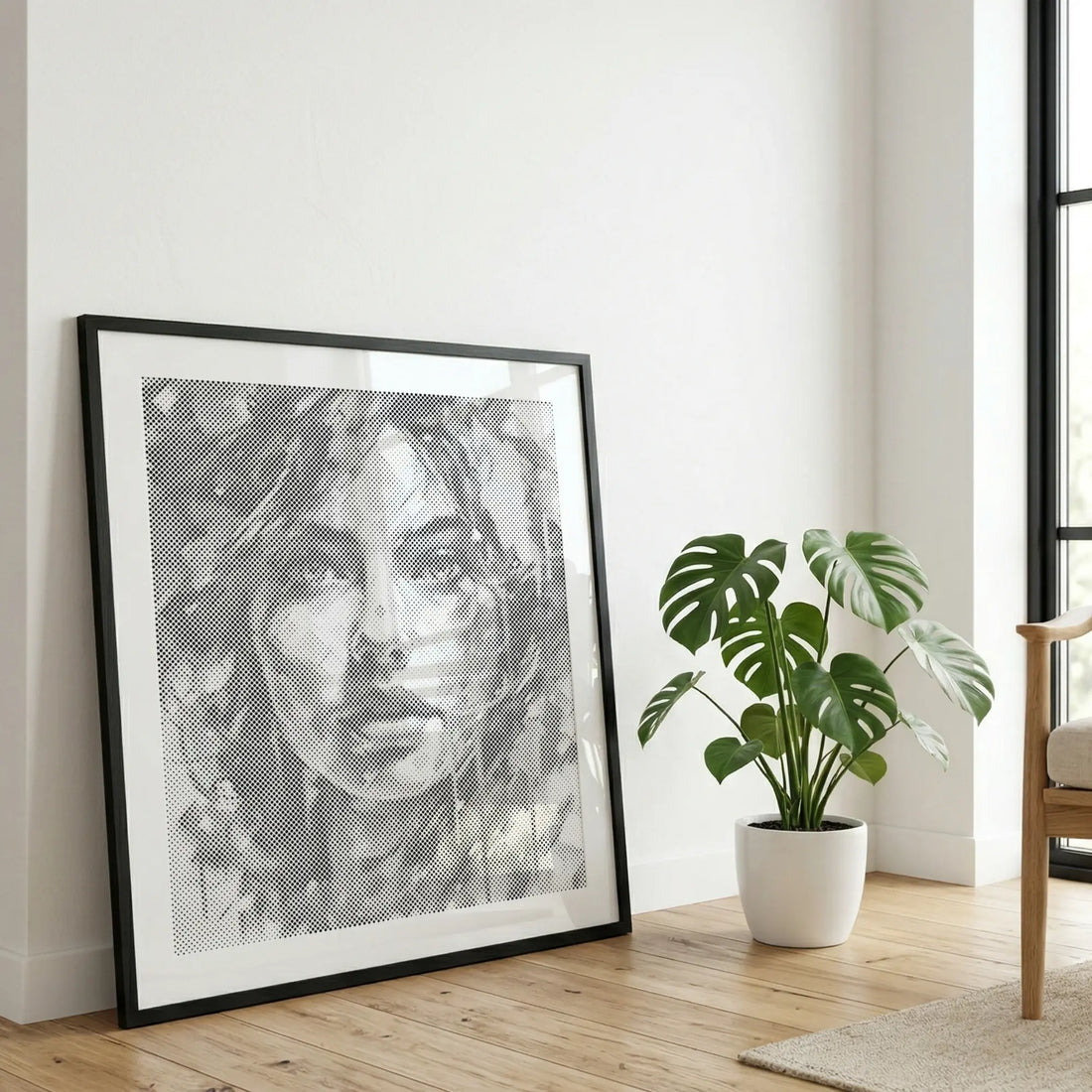
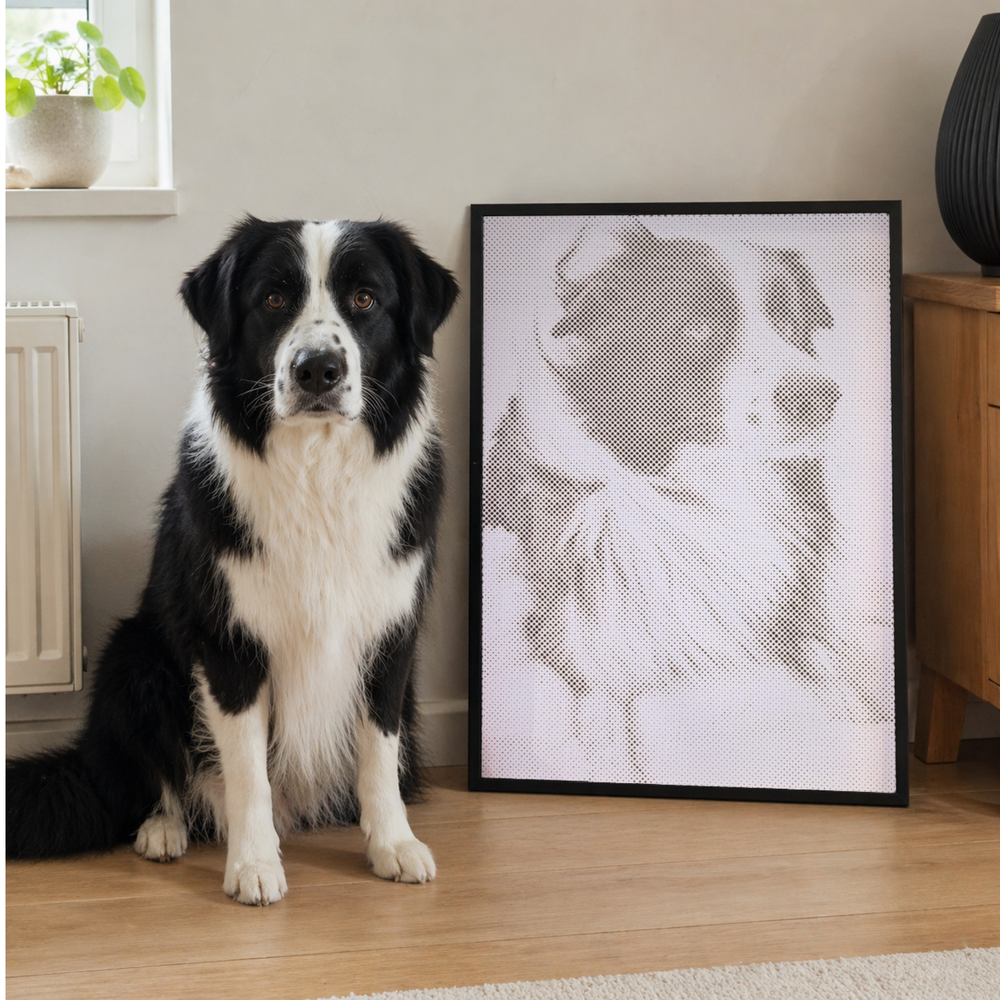
Het populairste product in het Paint By Dots assortiment is het Custom Photo Dot Painting. Je uploadt een foto, een familieportret, een huisdier, een trouwfoto, een plek die iets betekent, en een lid van ons team zet deze handmatig om in een dot painting canvas.
Dit is niet geautomatiseerd. Geen filter. Een echt persoon beoordeelt elke afbeelding, past het stippenpatroon aan voor helderheid en detail, en produceert een canvas dat de foto getrouw weergeeft. Het resultaat is iets dat je zelf maakt, stip voor stip, en dat niemand anders heeft.